
Australian decimal currency banknotes have a fascinating design history. A 1968 Penrose Annual article by renowned graphic designer Alistair Morrison provides a detailed account of the working methods of the team of graphic designers who collaborated on Australia’s first decimal currency banknotes.
In early 1963 the Commonwealth Government announced that a new decimal currency system was going to be developed to replace the imperial system of pounds, shillings and pence, and accordingly new bank notes were to be designed and begin circulation by February, 1966.
The design committee
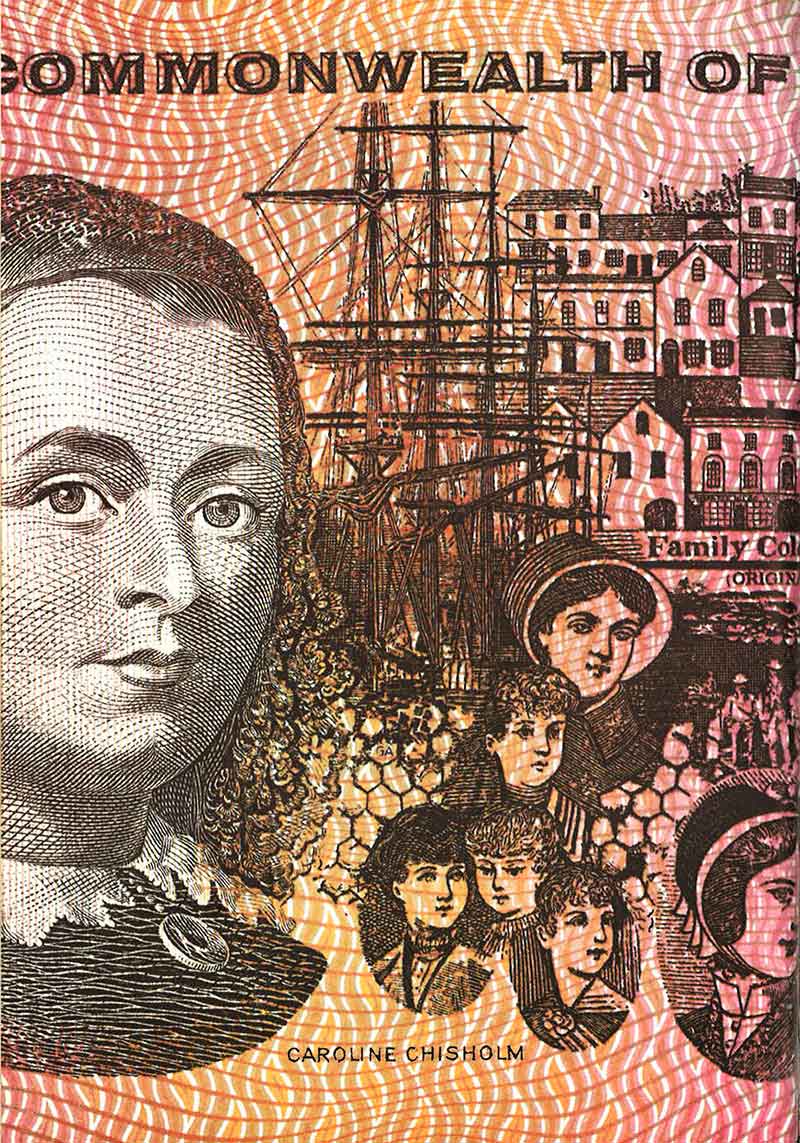
The Reserve Bank of Australia was responsible for the design and printing of the new notes, and assembled a team of seven leading Australian graphic designers to ensure that the design was of the highest possible standard. The seven designers were: Gordon Andrews, Douglas Annand, Richard Beck, Max Forbes, George Hamori, Hal Missingham and Alistair Morrison. The design team’s ambitions were very high and Morrison wrote:
We wanted the notes to be better designed than any in the world; we wanted to justify the bank’s confidence in us; and we wanted everyone to see that this was the way things should be done – that if creative people are consulted early enough and given a free hand they will produce infinitely better work than if they are asked merely to be the executives of decisions already made.”
How the committee worked together
Annand, Missingham and Morrison assumed advisory roles to lead designers Andrews, Beck, Forbes and Hamori. The full committee, together with Russell (‘Tass’) Drysdale, the Reserve Bank’s artistic adviser, met regularly to review the developing ideas and designs. Therefore the design process became partly competitive and partly collaborative, and when each designer submitted ideas, he had the benefit of the knowledge, skills and experience of six other designers. As Morrison explained:
Each designer’s work from the first preliminary doodles to the finished designs … was submitted to the full committee, and we all said what we thought and made suggestions. Some of the criticism was ruthless, but it was all constructive. The designer was free to accept or reject it, but he could hardly ignore it, and it was fascinating … to see how the work of each designer was improved by this treatment. Each of us had some knowledge, or skill, or had had some experience, which the others lacked; so each designer, without having to spend days in perhaps fruitless research, could draw on this sum of knowledge and advice. One of us would see something; some subtle misplacement of an element of the design, or some minor imbalance of tone or colour, which the others had not noticed; particularly the designer himself, who is always so close to his own work.”
Final delivery
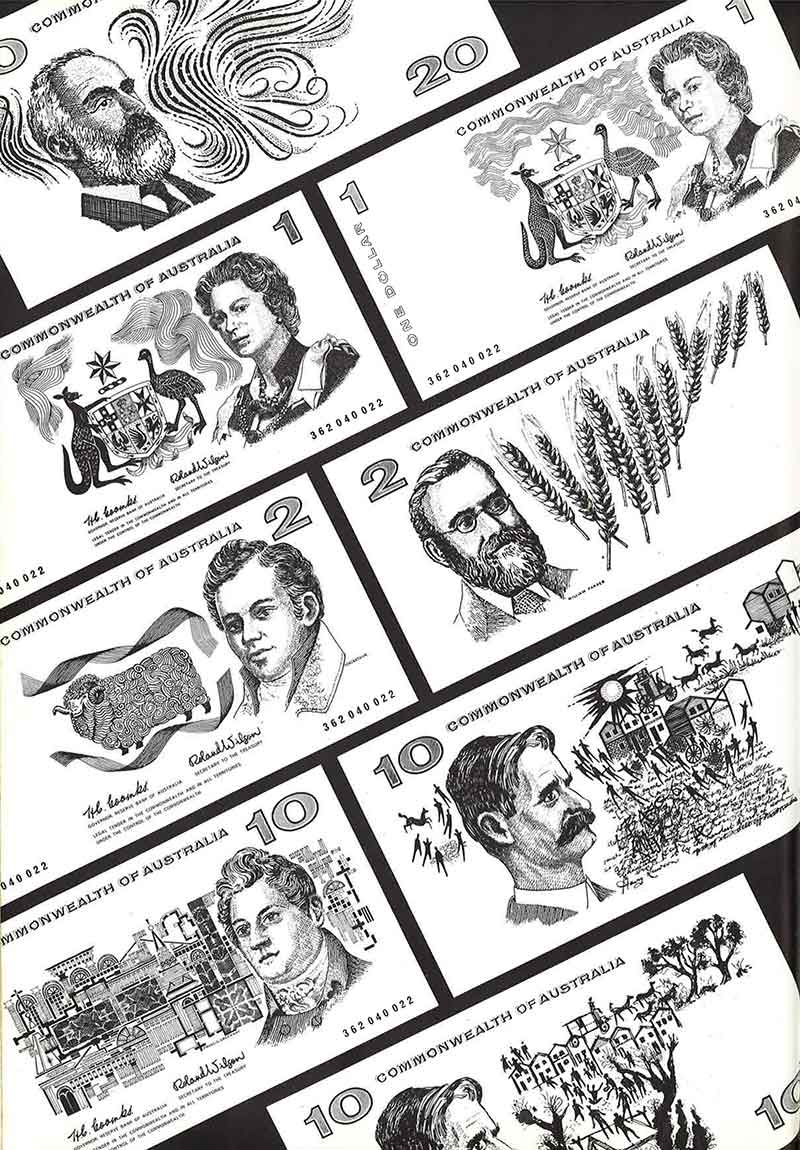
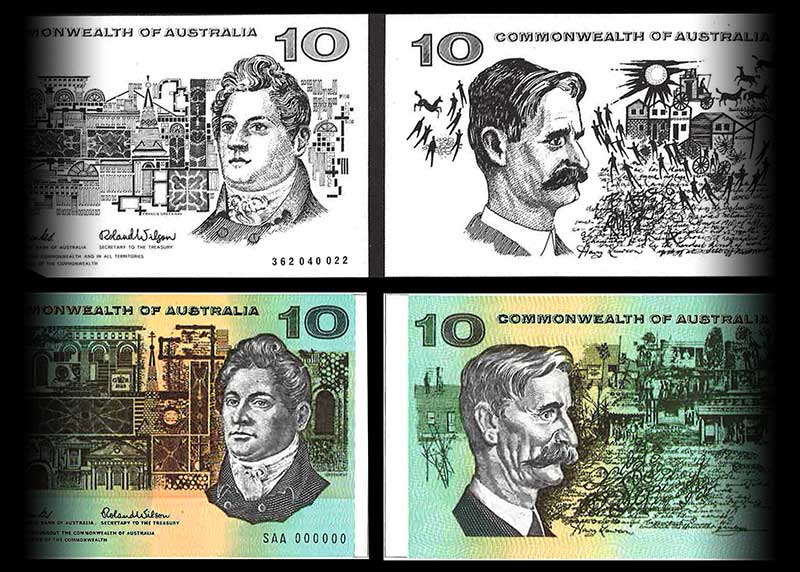
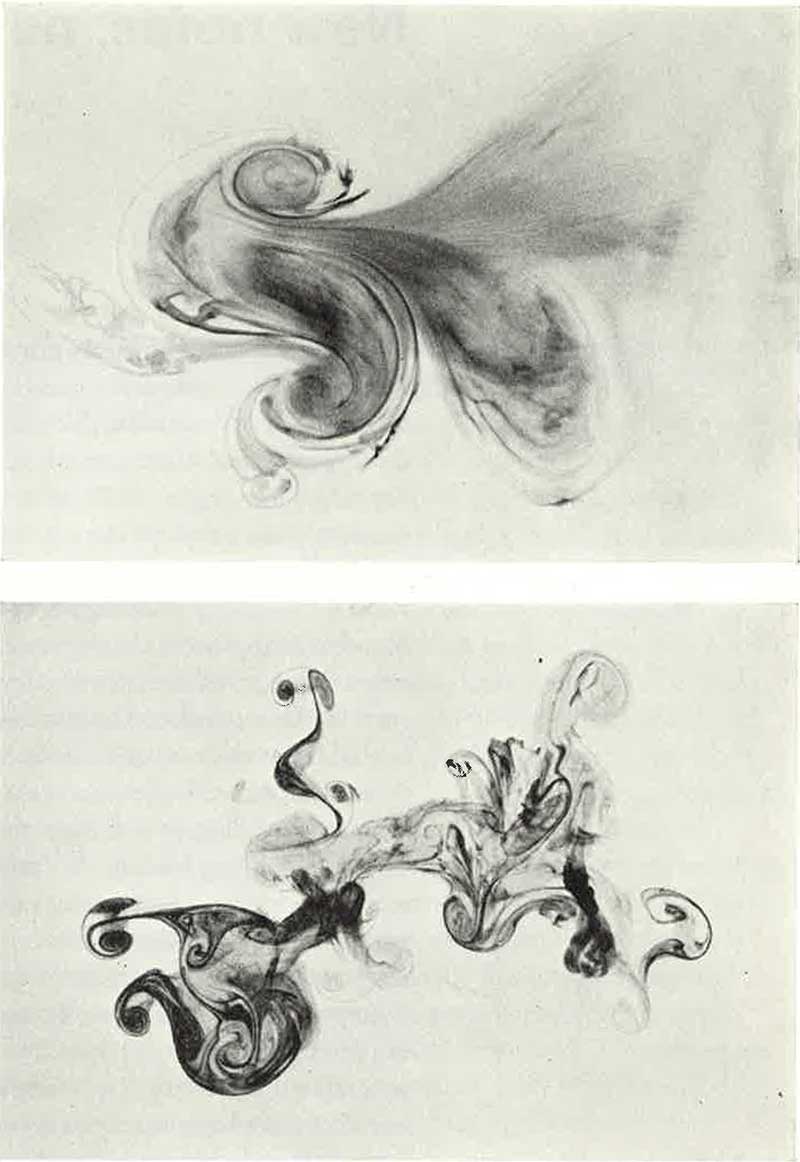
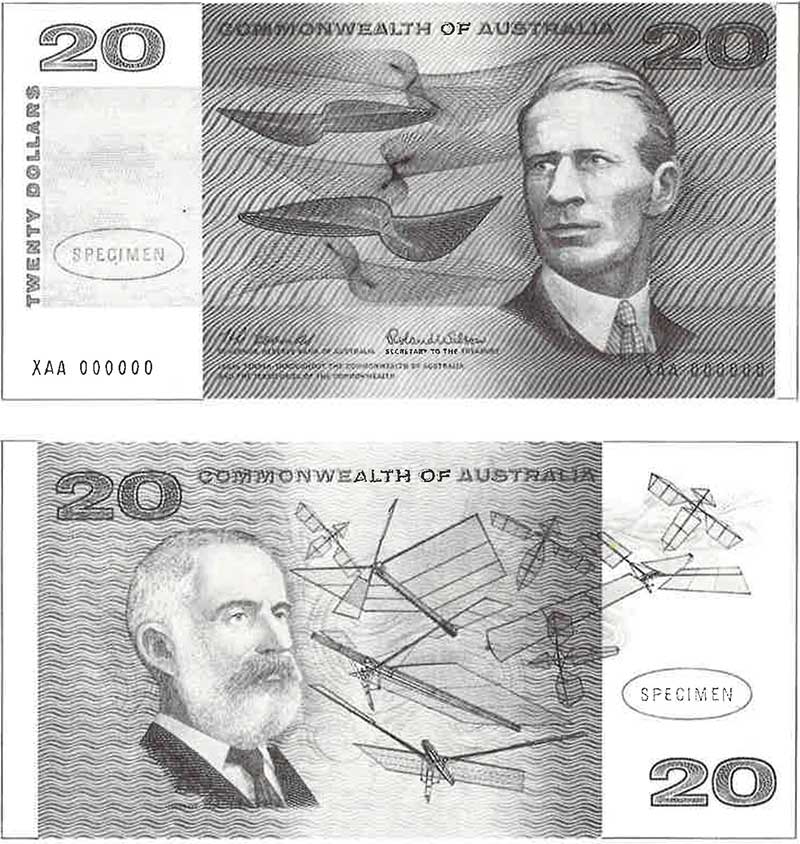
The design proposals of Andrews, Beck, Forbes and Hamori were all submitted to the Reserve Bank in March, 1964. Four sets of designs were delivered, one by each of the four designers. Each set was a series of eight designs – both sides of each of the four denominations required: one, two, ten and twenty dollar notes. Whilst all the designs were thought to be highly commendable, the Reserve Bank Committee selected Gordon Andrews’ designs as the best. To gain a greater appreciation of the quality of the entire teams’ efforts, some of the beautiful work by the other designers can be seen here.
The committee successfully delivered four sets of designs to the Reserve Bank, one by each of the four designers. Each set was a series of eight designs – both sides of each of the four denominations required: one, two, ten and twenty dollar notes.
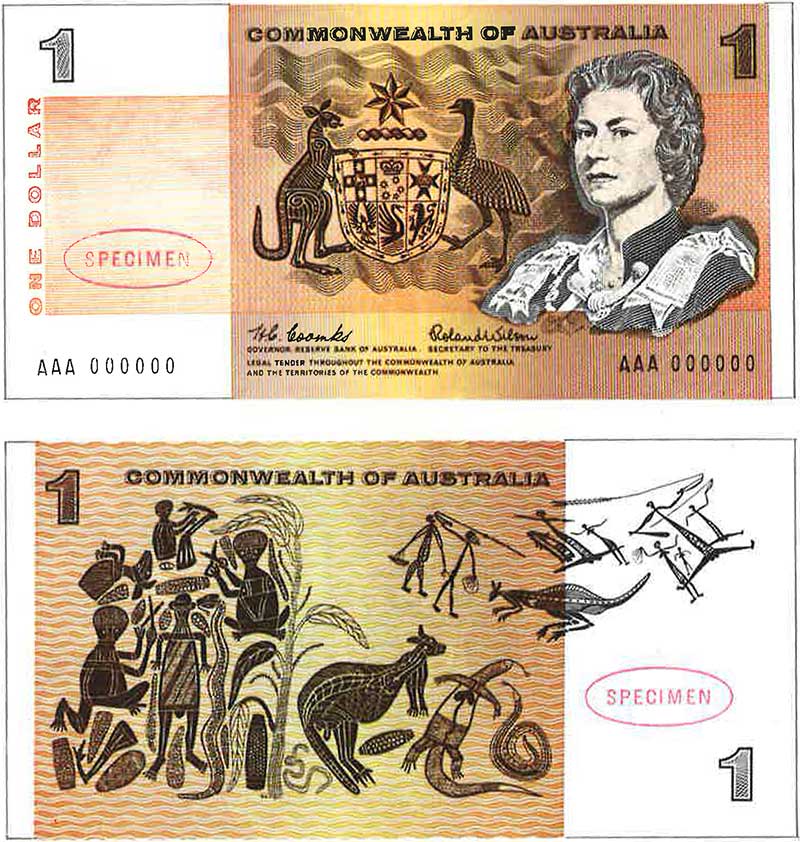
Gordon Andrews was then commissioned to proceed with the working drawings and to supervise the production of the new bank notes. The Reserve Bank website has more information, and explains that during 1965 the Bank’s Note Printing Branch produced close to 153 million new decimal currency bank notes, and that these were joined by new decimal coins that had been designed by Stuart Devlin.
Monday, February 14, 1966 became known as ‘C-Day’ (Conversion Day), with a prominent education campaign running during the lead-up to prepare the public for the introduction of the new currency.
Leave a Reply